


Notice the thought
Make room to name what is happening.
THE SCIENCE
Opening an app can become a familiar response to a notification, a quiet moment, or a feeling. URGEFLIP gives you a pause when a protected app opens.
01. THE PATTERN
A notification, a quiet moment, or a familiar feeling can cue a reflexive check. A small pause gives that moment more room.

A notification or feeling can invite a quick check.

A familiar response can become automatic.

The next screen can be tempting in the moment.


02. THE SOLUTION
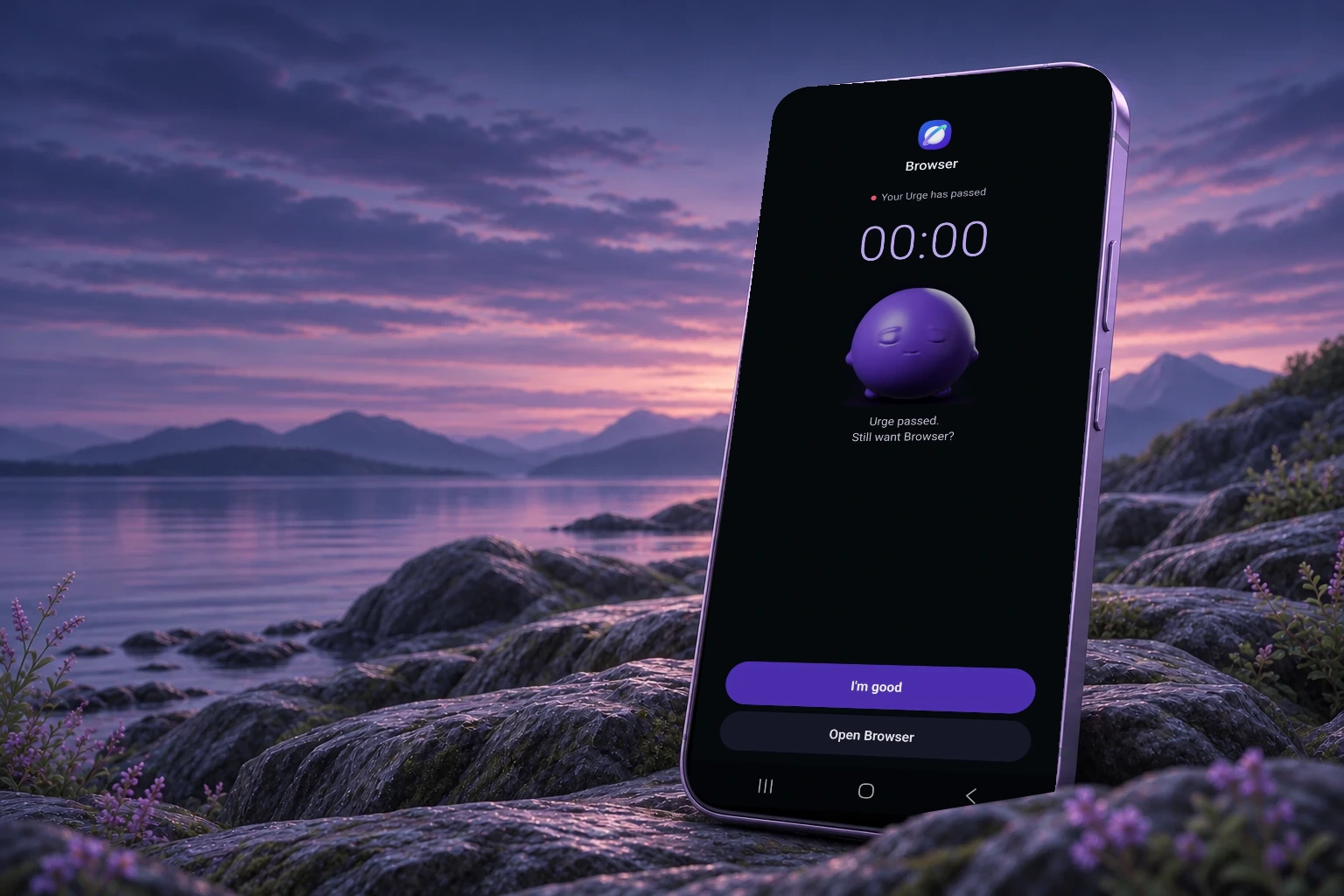
Choose which apps to protect. When one opens, URGEFLIP gives you a moment to pause and decide what comes next.App screenshots show URGEGAP branding. Displayed figures are not evidence of product effectiveness.
03. THE GAP
The Gap is a short, intentional moment when you open a distracting app. Notice the urge and choose what comes next.
Step back for a few seconds.
Check in with yourself.
Continue or step away.
04. THE THINKING BEHIND IT
URGEFLIP is a prompt to check in, without judging your screen time.
Make room to name what is happening.

Practice one manageable pause at a time.

Bring attention back to your own choice.

Notice what works without aiming for perfection.
Research on smartphone checking and habit formation informs this design approach. These studies did not test URGEFLIP, and URGEFLIP is not a treatment for a health condition. Background reading: Oulasvirta et al. (2012); Lally et al. (2010).